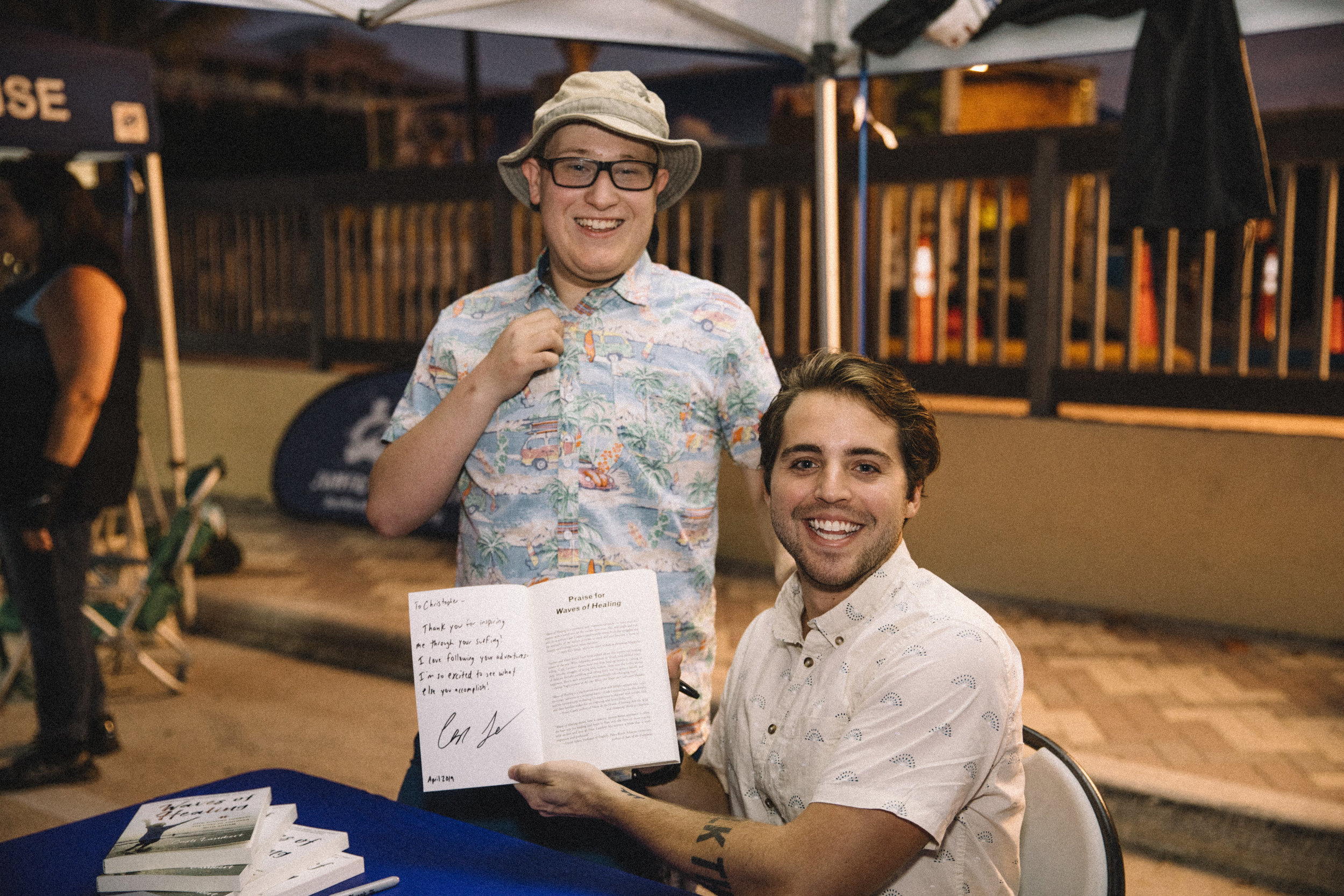
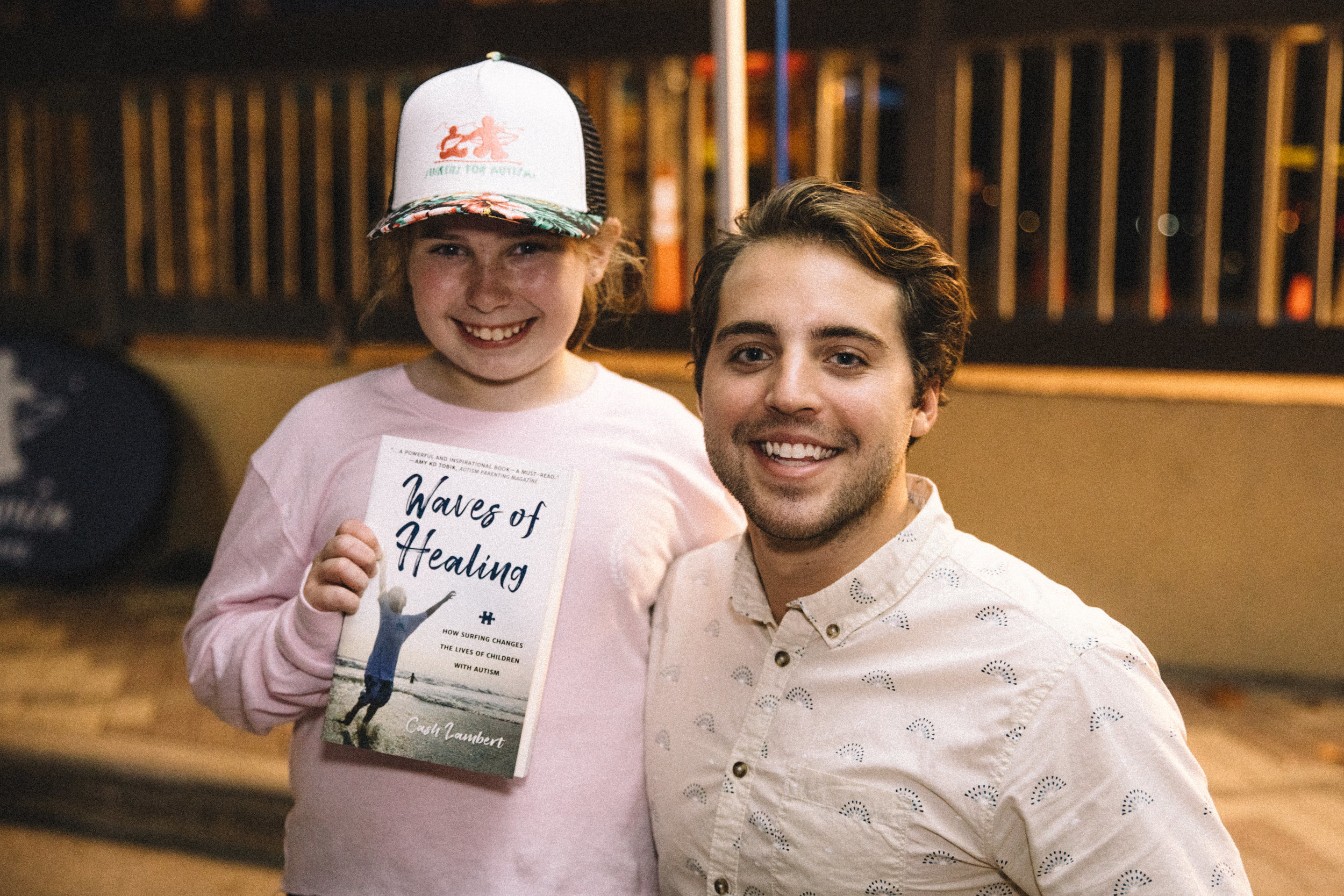
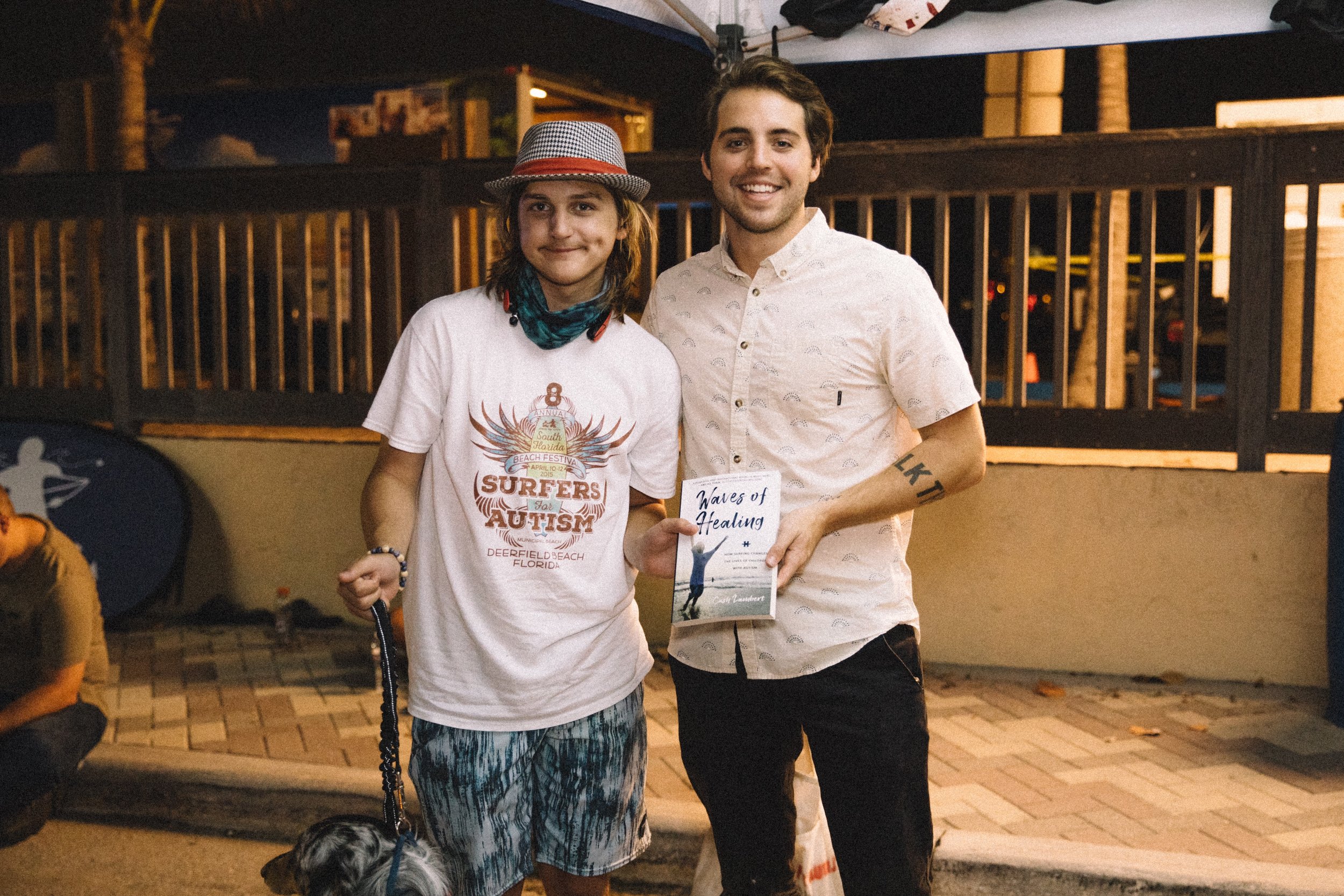
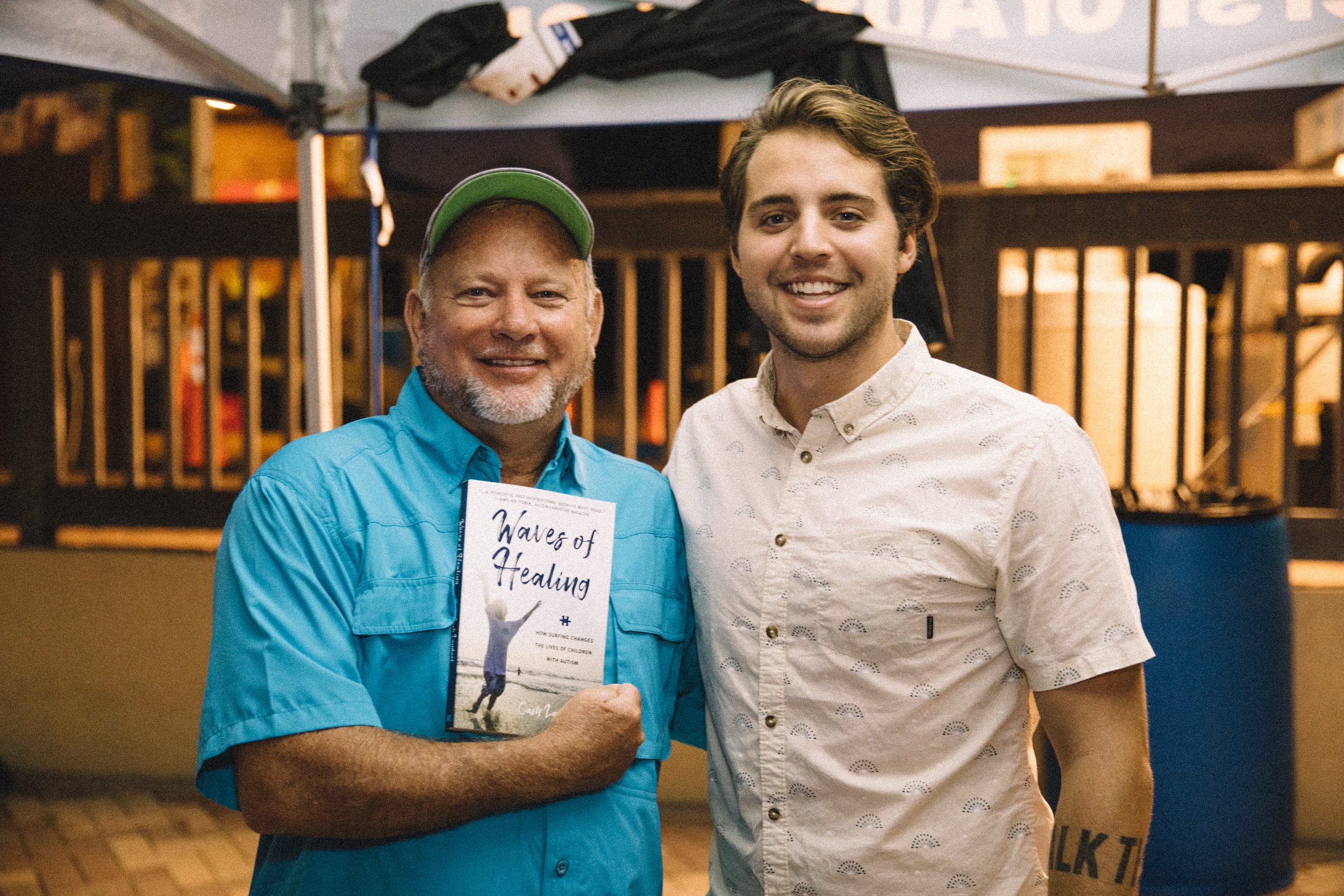
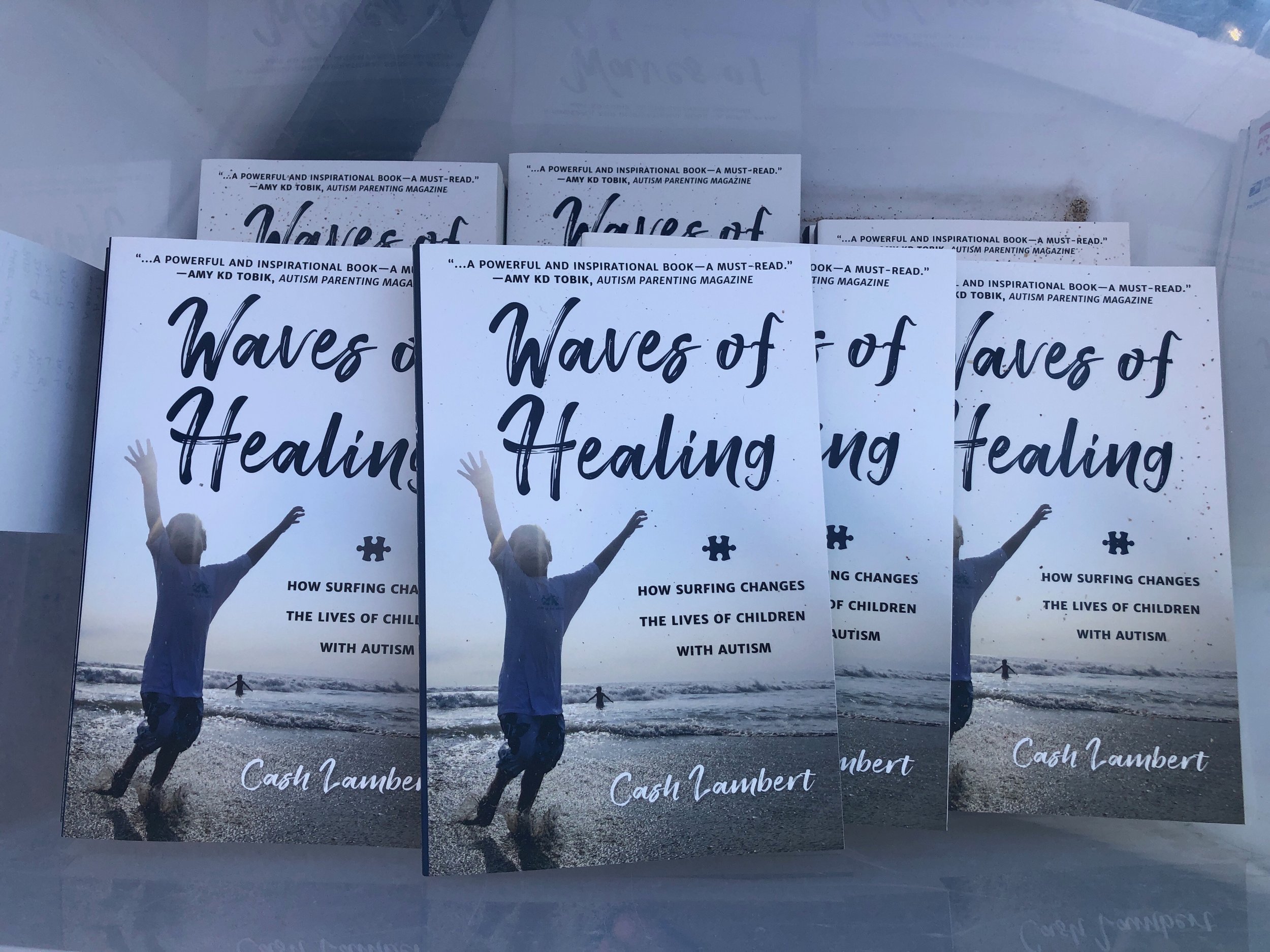
Void Magazine Features "Waves of Healing"

Void Magazine allowed me to contribute to their annual “Do Good” magazine issue, where I wrote about how surfing is changing lives — no co-pay required.

Screen Shot 2020-01-07 at 4.18.08 PM.png

The first time I saw surfing change the lives of children with special needs, I was standing with a surfboard on the sands of Jacksonville Beach. 

While it seemed like an ordinary beach day—waist-high swell filled the area just south of the pier as beachgoers flooded the wooden walkways—what was happening in the water was anything but ordinary. 

On this day, a nonprofit organization called Surfers for Autism offered to take children with autism surfing. If you aren’t familiar with autism, it’s a developmental disability that sees children struggle against difficulties with social skills, repetitive behaviors, and communication. This condition irrevocably changes the life of the child and the lives of everyone around them. According to the CDC, it affects one in 59 children. 

But at this surf event, those with an autism diagnosis were not walking statistics. Instead, they were surfers. 

Earlier in the day, families filled the beach, creating a makeshift city from their tents. Reggae music pumped out of the loudspeakers and surfboards lined the sand.

After a volunteer meeting, surfing—and the miracles—began. 

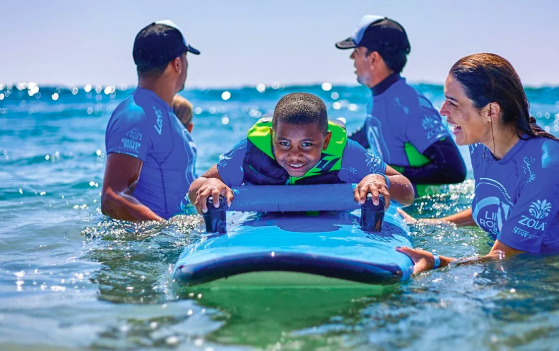
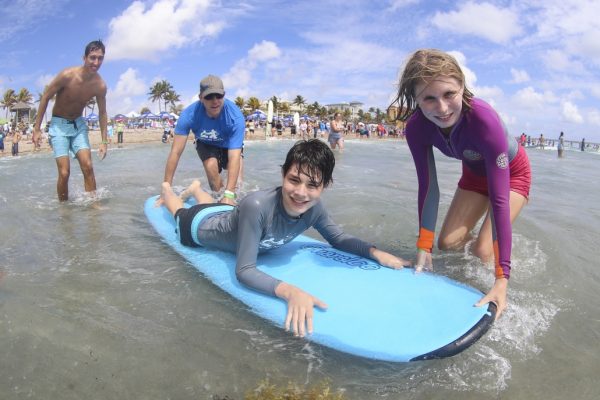
Here’s how it worked: an army of volunteers stood in a line parallel to the beach, and were introduced by SFA staff to participants. Some children were excited; others looked nervous and quiet, and some were in absolute meltdown, crying and sending sand in all directions. 

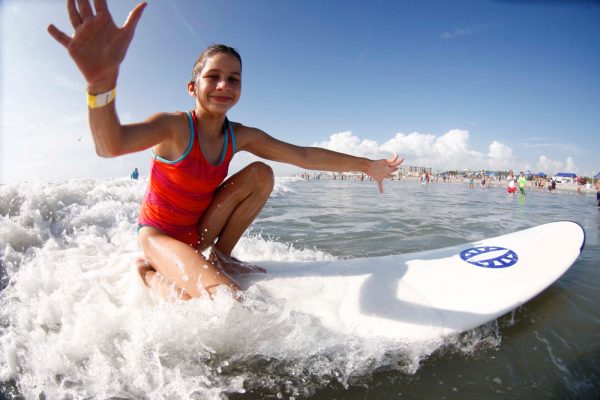
But none of that mattered once they entered the water, hand in hand with surf volunteers who called Jacksonville home. 

When the right wave came, volunteers pushed the participants atop surfboards while chanting phrases like “up up up!” and “You can do it!” 

Children diagnosed with nonverbal autism—who had rarely said any words to even their parents—were suddenly cheering and saying things like “I did it!” and asking for more with phrases like “Another wave!” Participants who were previously screaming on the beach in fear were suddenly calm, relaxed, and smiling. Some children were riding waves into shore as if they’d been doing so for years. Families and other volunteers formed a loud cheering section on the beach. Mothers and fathers cried. 

The surf session lasted all day. Speaking with the parents during the event, I realized there was more to the unique relationship between surfing and autism. This wasn’t just a fun event to attend on the weekends—surfing was therapeutic for these children. And there was no copay required. 

An avid surfer myself, I began to wonder exactly what made surfing therapeutic. What’s more, I was curious as to why a select group of families attended each Surfers for Autism event during their “Surf Tour.” Since the organization’s genesis in 2008, there have been 10-13 events up and down the Florida coast and these self-proclaimed groupies didn’t miss an event. 

The inaugural Jacksonville Beach event was in 2010. I spent the next four years with the organization, seeking to understand how surfing is therapeutic from a scientific and a personal level. I went to therapy sessions, birthday parties, and became part of this eclectic surfing family. All the while, I wrote down what I heard and experienced. 

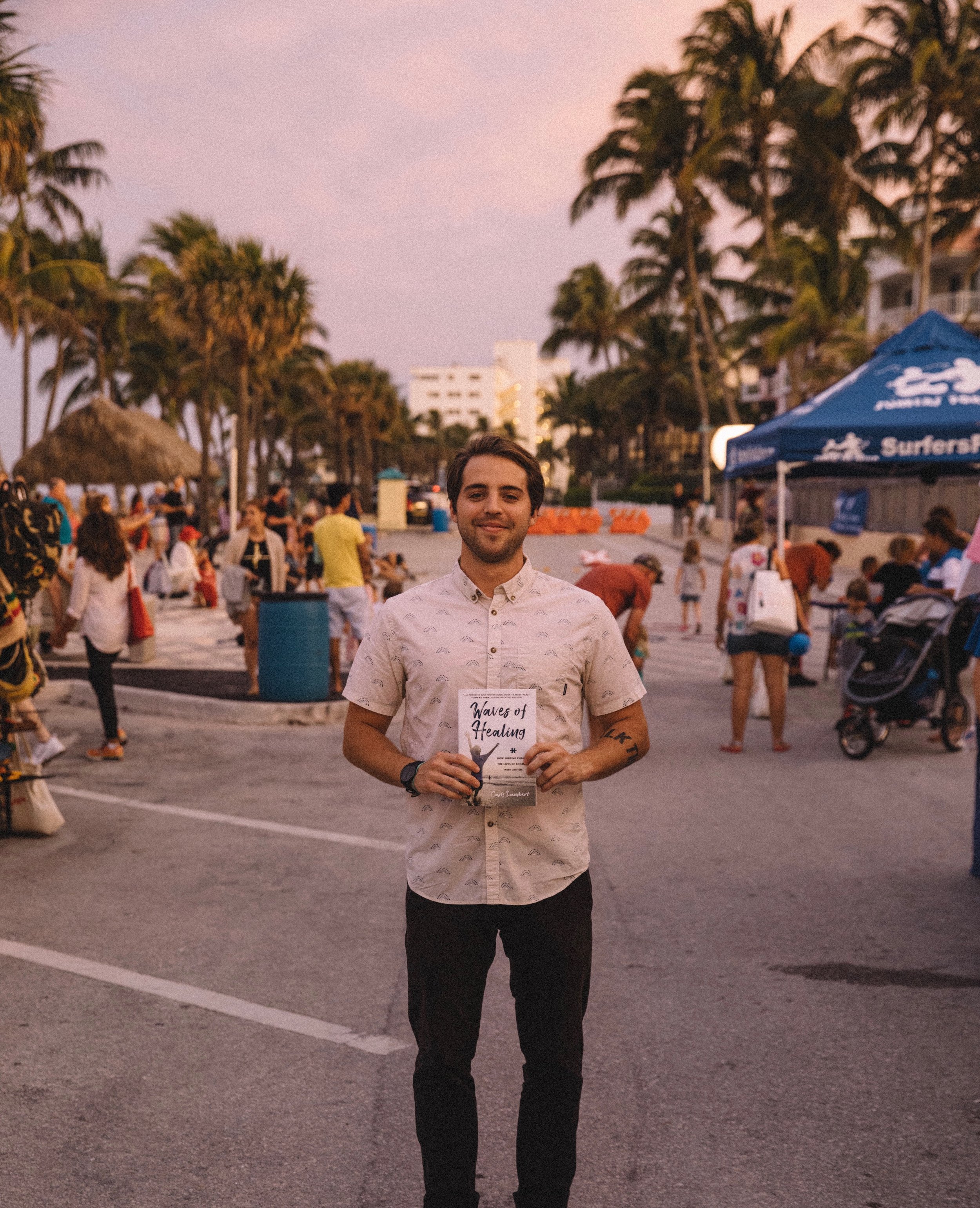
I tell these families’ stories in Waves of Healing: How Surfing Changes the Lives of Children with Autism, published by Hatherleigh Press and Penguin Random House, which was released this year. These are stories about the struggles children with autism face—the struggle to stand on a surfboard, the struggle to communicate, the struggle to make progress in a world which accepts “normal” and rejects all else. But they’re also stories of breakthroughs, of authentic joy and unbridled excitement as the children learn to see their world from a whole new perspective — standing tall atop a surfboard, riding a wave all their own.

In my research, I learned how surfing can affect children with autism, how it can have a tremendous impact on parents and how it can unite a community.

In the book Blue Mind: The Surprising Science That Shows How Being Near, In, On, or Under Water Can Make You Happier, Healthier, More Connected, and Better at What You Doscientist Wallace J. Nichols explores scientific studies on why water is therapeutic, which I stumbled upon for the writing of my book. Here’s a short excerpt: 

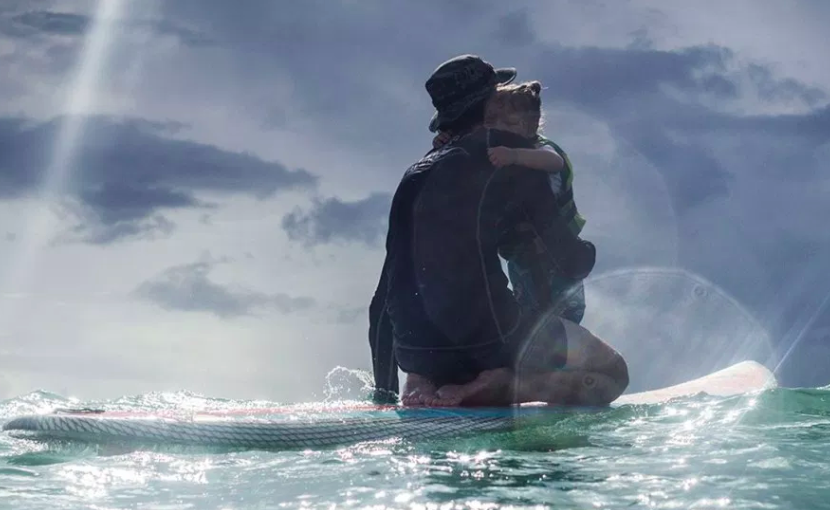
Nichols writes: “There are all kinds of theories about why this happens. The water is stimulating visually, which fulfills some children’s sensory needs; water provides a safe and supported environment’ that surrounds the body with ‘hydrostatic pressure’ that ‘soothes and calms’ (as another expert said, it feels like the ultimate hug). Learning new motor skills like swimming, surfing or paddleboarding can have ‘a broad-ranging impact on the nervous system,’ according to William Greenough at the Beckman Institute at the University of Illinois: “There’s increased blood flow to crucial neurons, and the reshaping of abnormal structures in the front brain. But beyond that, surfing may be a vehicle to an emotional breakthrough, a way of reaching under the mask and perhaps connecting to kids like these.” Trying to balance and ride waves also provides them with a clear focus and keeps them in the present moment. 

Not only is surfing life-changing for those with autism. It also transforms the lives of parents, something I saw firsthand. You see, thanks to these organized surf events, for the first time families have a support network, someone to relate to and discuss their challenges with. On the beach in Jacksonville, as well as at other events, commonality was found, and bonds were born. 

I also saw communities rallying around these events and children with special needs. In city after city, food and water were donated for the families. Policemen and firefighters parked their cars in the beach parking lots so the participants (with sand covering their feet) could look inside and even finger paint on the exterior. Plus, local surfers were teaching their passion to participants and sharing in their excitement. To this day, many families have framed photos of their children standing alongside these volunteers on the beach. 

My book is not a story of the past. It is a story that, like one’s surfing ability, continues to evolve.

Here’s what I mean: Surfers for Autism has held its annual Jacksonville Beach event for a decade and expects to continue the tradition, inviting familiar and new faces to the beach each year. Attend an SFA event and you’ll find participants who had their lives changed by surfing years ago are now helping others with the same diagnosis experience therapeutic feelings, serving as volunteer surf instructors. Or you can attend other surf therapy events. Thanks to this rapidly growing trend, there are now dozens of surf therapy organizations along America’s coastlines.

As long as there are waves, there will be people riding waves of healing. Some of them though, need your help.

IMG_7734SFAJaxbeachSept242011-620x413.jpg

Surfline Article: International Surf Therapy Symposium breaks ground in LA

SL_20191109_ccernik-11.jpg

I covered the International Surf Therapy Organization’s Conference — interviewing pro surfers, scientists and surf therapy organizations — for Surfline.

By Cash Lambert

Photos by Christina Cernik

Surfing feels good.

No secret there. Coming out of the water feeling better is a pretty universal reaction. But in recent years, the research and testimonials are showing that it’s more than a feeling — surfing is actually a healer.

Defined by the International Surf Therapy Organization (ISTO) as “the evidence-based, clinically-guided and structured use of surfing as a therapeutic vehicle in the prevention and treatment of social, behavioral, health, economic, and other global challenges,’” surf therapy can remedy many different afflictions — special needs, PTSD, trauma, mental health, social challenges… In fact, surf healing is currently prescribed in the UK through an organization called the Wave Project. Advocates from the ISTO conference are aiming to make it a type of prescription in other countries, including the U.S.

Children diagnosed with autism, veterans struggling with PTSD, teenagers living in extreme poverty…

Every day, we hear stories of desperate lives being changed for the better through surfing.

Screen Shot 2020-01-07 at 7.50.20 PM.png

Those with mental illnesses find solace by riding waves of healing — due in part to the many surf therapy organizations driven by the belief that, as the adage goes: If you want to go fast, go alone; if you want to go far, go together.

The International Surf Therapy Organization was founded to unite and empower these surf therapy groups that have been affecting change around the world. After meeting in Cape Town in 2017 and Jeffrey’s Bay in 2018, well over 300 pro surfers, scientists, researchers, nonprofit organizations and volunteers met again this year in Los Angeles, CA. From November 6th-10th, 2019, the International Surf Therapy Symposium included two days of panel speakers exploring topics like “The Intersection of Surf and Science,” “Women Pioneers of Surf Therapy,” “Growing the Global Evidence Base for Surf Therapy,” while pro surfers also showed up to discuss their involvement, including Alex Gray, Dane Gudauskas, Aritz Aranburu, and Jose Ferreira.

The ISTO symposium also served as a measuring stick to see how much the sector of surf therapy has grown in recent years. While numbers are still being populated, here’s a snapshot: in 2017, eight surf therapy programs were a part of the ISTO. In 2018, that number grew to 15. This year, ISTO has engaged with 70 surf therapy programs. “We are fully aware of dozens more,” said Kris Primacio, CEO of ISTO.

That’s an 812% growth of surf therapy organizations joining the global coalition — thanks to passionate surf instructors and volunteers.

“I think in the room you got researchers, organizations, non-profits, pro surfers, some sponsors… It’s all the ingredients you need to take this to the next level,” said Wallace J. Nichols, a keynote speaker for the event and author of Blue Mind: The Surprising Science That Shows How Being Near, In, On, or Under Water Can Make You Happier, Healthier, More Connected, and Better at What You Do. “The distinguishing factor is the heart… People who love the ocean because it saved their life are unstoppable. You can build barriers and walls, you can unfund them, you can make it bureaucracy, but you can’t stop them. That’s what you feel. You don’t feel that at every conference.”

“I think this can permeate through the medical world, throughout industries, and this can be the start of a whole new awareness,” said photographer Aaron Chang, another keynote speaker who agreed that something special happened at this symposium. “Something that all of us who surf understand — that maybe don’t articulate well — is that it feels good to be in the water. We can’t explain it. We feel better every time we go in the water. I think these people [at the conference] have the academic training and skill sets to give that feeling a definition and deploy it where it can help a lot of people.”

Surf therapy is exploding in the academic world, as well, where more research and conversation, means more education, means more funding for programs. According to Jamie Marshall, a panel speaker at the ISTO symposium and the first-ever PhD candidate in Surf Therapy, “surf therapy in academia is currently seeing an exponential growth.”

He added that the first published surf therapy article in academia came out in 2011. Between 2011 and 2017, eight more articles came out. From 2017 til now, that number has doubled. He anticipates that in just a year, the article count will double yet again. “People are trying to publish [surf therapy research] in open-access journals, which means anyone can read them,” he said. “The reason being, then surf therapy practitioners can read them, and then we have the real truthful connection between deep rigorous science and the practice, which is the guys changing lives on the beach.”

“As a surfer, you inherently feel that connection and natural healing essence of surfing,” said Dane Gudauskas, “but to see it with so many people in the community from all aspects of people dealing with trauma… it’s amazing to hear it all come together and bridge that. There’s so many heroes in that room that are phenomenal. Think about all the kind of evolution that is going to come out of something like this.”

SL_20191109_ccernik-19.jpg

As for the volunteers? “A change in their lives. Happiness, satisfaction, self worth,” says Sean Swentek, Executive Director of A Walk On Water (AWOW).

“I’ve had volunteers tell me they were on the brink of suicide and participating changed their life. I’m a big believer in karmic value and I’m a big believer in the power of the ocean. I think if you put those two things together and you’re giving back through your love of surfing, you’re going to realize so much happiness, satisfaction, and gratitude.”

Thanks to more and more surf therapy organizations operating globally, getting involved has never been easier. “There’s still a massive opportunity for more surfers to get involved in surf therapy,” Swentek said. “Go to Intlsurftherapy.org and look at all the programs that are out there. Wherever you might be reading this, there’s a program near you. Volunteer once with a surf therapy organization and I guarantee it’ll change your perception and your life.”

Watch: Live Interview on CGTV

“CGTN's Rachelle Akuffo spoke to Cash Lambert, author of 'Waves of Healing: How Surfing Changes the Lives of Children with Autism,' about the benefits of surfing for children with ASD.”

I had the opportunity to talk with the Chinese Global Television Network about how surfing is therapeutic for children with autism and other special needs. You can watch the full interview here:

CGTN's Rachelle Akuffo spoke to Cash Lambert, author of 'Waves of Healing: How Surfing Changes the Lives of Children with Autism,' about the benefits of surfing for children with ASD. Video courtesy: Charles Dasher/Dasher Films

Adventure Sports Network Coverage of "Waves of Healing"

Stoked to be interviewed in an amazing article written by Jon Coen for the Adventure Sports Network about the healing powers of the sea. You can read the full article by clicking here.

Cash Lambert, the former editor of Hawaii’s “Freesurf Magazine” recently published the book “Waves of Healing.”

“In my research, I learned there are many ways surfing is therapeutic for children with autism, including studies from Wallace J. Nichols’ “Blue Mind,” which theorized that part of surfing’s therapeutic nature is because it requires participants to focus on the now,” says Lambert. “It’s what’s happening in the moment. Instead of thinking and acting on anxiety or stress, participants often think about what’s in front of them: a fast moving wave.

“When you combine that focus to what happens in your brain while you surf – a release of chemicals that foster motivation, movement and euphoria, such as dopamine and endorphins – the stage is set for significant progress to occur, or what’s known as ‘breakthroughs.’ I saw these breakthroughs with my own eyes.”

He observed children previously diagnosed as “nonverbal,” start speaking about their surfing experience.

“Children with autism who are hesitant to touch even their loved ones were holding hands with surf volunteers as they wade into the sea together,” Lambert continues. “Some participants even having a breakdown – screaming, kicking sand. But once they’re in the water, they become calmer and happier than their parents can recall them being.”

Freesurf Magazine: "North Shore Writer Releases New Book"

Screen Shot 2020-01-07 at 4.44.44 PM.png
Screen Shot 2020-01-07 at 4.43.54 PM.png

This article was originally published by Freesurf Magazine.

The following is an excerpt from former Editor of Freesurf Magazine Cash Lambert’s new book Waves of Healing: How Surfing Changes the Lives of Children with Autism. The 208 page book, published by Hatherleigh Press in partnership with Penguin Random House, explores how surfing is therapeutic on a scientific level as well as how it’s transformed the lives of 8 families over the course of a decade.

I had experienced the therapeutic properties of water already, at least to some degree.

There had been multiple instances when, after jumping into the ocean, a lake or a pool, I simply felt better; more relaxed, more present. Not to mention, I’d been completely hooked on surfing since that first moment standing atop a surfboard, sliding down a wall of solid water at Waikiki Beach—the Mecca of surfing.

Point is, surf therapy isn’t new to our culture. In fact, there’s tens of organizations from “sea to shining sea” that take participants surfing, from those with special needs to military members with PTSD and more. The resounding result is that the participants smile from ear to ear, and experience specific therapeutic benefits. They too become hooked.

In the book Blue Mind: The Surprising Science That Shows How Being Near, In, On, or Under Water Can Make You Happier, Healthier, More Connected, and Better at What You Do—published in 2014—author Wallace J. Nichols, a scientist/researcher, devotes 260 pages, with over 40 pages of references and citations, to scientific studies on the question of why water is therapeutic, injecting commentary on topics including why we’re drawn to water in the first place, why we respond to its beckoning color so well, and how exactly it can make us feel better. More than anything, the text seems to signify that research on water and the true effects of its healing properties, much like in the autism field, is ever expanding. According to Nichols, there’s science behind why those who surf are likely to become hooked.

unedited19.jpg

“…Dopamine release is associated with novelty, risk, desire, and effort activity; it’s also a key part of the system by which the brain learns. All of these factors, Zald points out, are present in surfing: ‘as surfers are first learning, there’s an amazing burst of dopamine simply when they stand on the board…Novelty? Check. Risk? Check. Learning? Check. Aerobic activity? Check. Dopamine? In spades.” But that’s not all…aerobic exercises (such as surfing) produce endorphins, the opioids that affect the prefrontal and limbic areas of the brain involved in emotional processing, and create the feeling of euphoria, known as runner’s high. The beauty of the natural environment where people surf also increases the sense of a peak emotional experience. Add the dopamine, the endorphins, and the natural setting to the adrenaline rush produced by the amygdala’s fight or flight impulse when a surfer is faced with a large wave (or a wave of any kind when you’re first starting out), and you’ve got a seriously addictive experience.” (Nichols, Wallace J. Blue Mind: The Surprising Science That Shows How Being Near, In, On, or under Water Can Make You Happier, Healthier, More Connected, and Better at What You Do. 115-16. Print.)

I dug further into Nichols’ work to find out how water, surfing and even just being on a surfboard can be therapeutic for children with autism.

“There are all kinds of theories about why this happens. The water is stimulating visually, which fulfills some children’s sensory needs; water provides ‘a safe and supported environment’ that surrounds the body with ‘hydrostatic pressure’ that ‘soothes and calms’ (as another expert said, it feels like the ultimate hug). Learning new motor skills like swimming, surfing or paddle boarding can have ‘a broad ranging impact on the nervous system,’ according to William Greenough at the Beckman Institute at the University of Illinois: “There’s increased blood flow to crucial neurons, and the reshaping of abnormal structures in the front brain. But beyond that, surfing may be a vehicle to an emotional breakthrough, a way of reaching under the mask and perhaps connecting to kids like these.” Trying to balance and ride waves also provides them with a clear focus and keeps them in the present moment—neurobiologist Peter Vanderklish believes that the beauty of surfing ‘turns the focus of these kids inside out. They’re pulled out of themselves by having to live in the moment, and all their anxieties push aside.’” (Nichols, Wallace J. Blue Mind: The Surprising Science That Shows How Being Near, In, On, or under Water Can Make You Happier, Healthier, More Connected, and Better at What You Do. 175. Print.)

While these theories are speculative, they do begin to paint a picture on an otherwise blank canvas as to why surfing and water do indeed aid in a progression of sorts, as well as how water can help children on the spectrum say their first words.

“Perfect waves and empty beaches, the sport of surfing is easily romanticized, but at its core it possesses the power to change one’s life. For those who struggle with autism, surfing can mean a freedom and joy like they’ve never experienced. Author Cash Lambert has taken the time to tell the story of this unlikely relationship. He tenderly makes the case for the healing powers of the sea, as well as how and why it can be so therapeutic for those on the autism spectrum. Waves of Healing will stoke you out, it will tug on your heartstrings, and it will make you reconsider what those with autism are capable of—and how one good ride can change everything.” —Jake Howard, surf writer and editor of First Priority: A Father’s Journey in Raising World Champion Surfer Carissa Moore

Autism Journey: How Surfing is Therapeutic

This article was originally published by Autism Journey.

I volunteered at a surfing for autism event with a simple goal: to impact the lives of the participants with autism. But I had no idea that it would impact my life.

Like most families and volunteers, I will never forget that day. Attend a surf therapy event and you’re bound to see children with autism riding waves to shore as a crowd cheers and claps; you’ll see those not receptive to touch holding the hands of volunteers; you’ll hear children diagnosed as “nonverbal” speaking words and so much more. Plus, with this form of therapy, there’s no co-pay required.

Surf therapy has gained momentum in recent years, with organizations sprouting up in coastal beach towns around the world.

These organizations, along with the families who attend surf events, claim that not only is surfing is therapeutic—it’s a life changing. In order to find out why, I spent years with families and their children on the autism spectrum, examining just how surfing has changed their lives as well as the science behind it all.

The result is the book Waves of Healing: How Surfing is Therapeutic for Children with Autism, published by Hatherleigh Press in partnership with Penguin Random House.

The book tells stories about the struggles children with autism face—the struggle to stand on a surfboard, the struggle to communicate, the struggle to make progress in a world which accepts “normal” and rejects all else.

But they’re also stories of breakthroughs, of authentic joy and unbridled excitement as they learn to see their world from a whole new perspective—standing tall atop a surfboard, riding a wave all their own.

“Often, it’s difficult to understand the everyday struggles and small milestones that families raising a child with autism face, but Cash Lambert’s firsthand ride-along—both on land and in the sea—truly puts their lives into perspective. A deeply honest and eloquent account, Waves of Healing is a story of hope, and a discovery of what the therapeutic power of the ocean—and organizations like Surfers For Autism—can do.”

—Beau Flemister, former editor-at-large of Surfing Magazine and author of In the Seat of a Stranger’s Car

Exploring new avenues of therapy for those with autism, with therapeutic and extraordinary results, Waves of Healing is a snapshot of hope, courage, and human perseverance.

Not only did I see an autism community changed by the transformative power of the ocean and surfing—I realized that by volunteering, by giving yourself to a cause, you receive just as much in return as the participants do.

Waves of Healing: How Surfing Changes the Lives of Children with Autism is available in bookstores around the world, including AmazonBarnes and NobleWal Mart, and Target.

Eastern Surf Magazine: “Healing Comes In Waves”

This article was originally published by Eastern Surf Magazine.

Book Review and Q&A by Jason Hoover

Everybody has obstacles in their lives that we must fight to overcome. As surfers, we tend to face our fears and problems using the valuable lessons and experiences the ocean teaches us.  For a large portion of families around the world today, they work diligently to find ways to overcome and manage the effects of Autism on their families.

The definition of Autism is “a developmental disorder of variable severity that is characterized by difficulty in social interaction and communication and by restricted or repetitive patterns of thought and behavior.”  

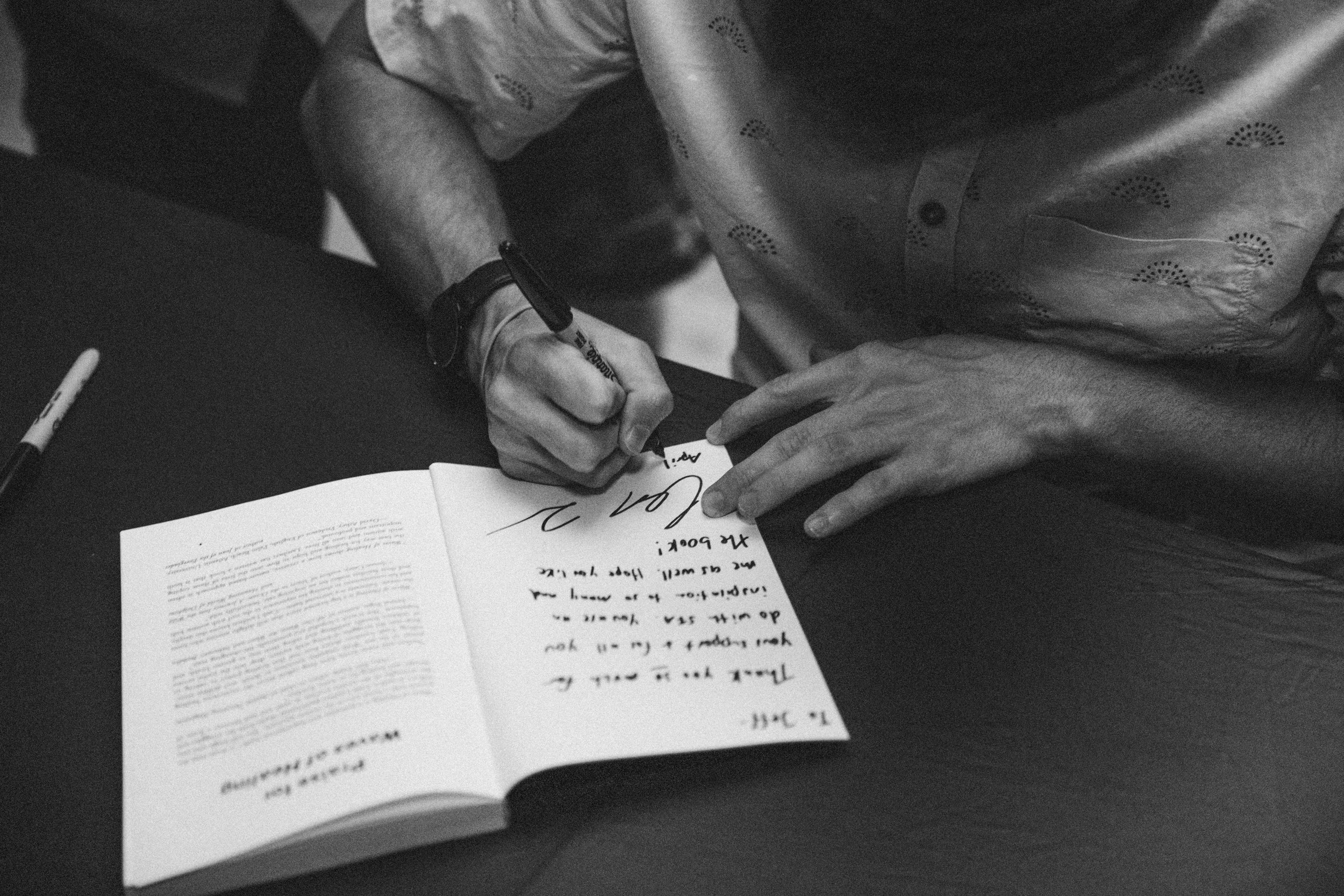
Recently, I received a copy of ESM alumni Cash Lambert’s book “Waves of Healing, ISBN#9780615295558”. I opened the cover to take a quick peak, planning to read it over the weekend, and four hours later I completed the entire book.  

As a former special education teacher, and the proud uncle of two nephews with Autism, this book struck close to home and I instantly felt as if Cash and I had volunteered at the same events.

Cash does a wonderful job of bringing the reader right along with him as he travels from town to town, meeting families who share their obstacles, defeats, wisdom, and victories with him openly. Which is emotionally powerful for both the families, participants, volunteers and spectators.

Readers can quickly pick up on the empathy and compassion of people like Cash who dedicate themselves to helping kids and adults who battle Autism experience the powerful healing attributes of the ocean.

A parting thought on this tremendous read by Cash, is that his story reminded this reader that by helping others, we gain just as much of a positive affirmation as the people we are helping. Well Done Cash!

Please read below for the bio and ESM Q&A with the author. – Jason Hoover.

What was your biggest challenge with this project?

The biggest challenge was figuring out how to write a book—on my own, fresh out of college at the age of 24. After all, you don’t just wake up one day and put over 50,000 words together. There’s so much truth in the saying that a dream without a plan is just a wish. Before I even started the project, I had to create a plan.

I attended by first Surfers for Autism event in 2010, and for 4 years (while studying journalism at Palm Beach Atlantic University in West Palm Beach, FL), I wrote about the organization and surf therapy for magazines, including Eastern Surf Magazine. Because most magazines articles max out around 1,000 words, I always felt like there was more to the story than just 1,000 words. And there was.

I remember having the thought that someone should write a book about the numerous inspirational stories born from Surfers for Autism and the extraordinary results from taking a child with autism surfing. The next thought in my head was “why don’t you do it, Cash?”

That became a challenge, and after committing to the idea mentally, I set out a strategy: I’d give myself 3 years to write a book about it. The first year would be researching about surfing, autism, and most importantly how to write a book. The second year I would write the book, and the third year I would find a publisher. That’s pretty much how it played out.

From idea to publication how long are we talking?

Because I was working on the book in my free time, and because I relocated from Florida to Oahu’s North Shore during that time, the entire project spanned about 4 years.

What would post publication Cash advise pre publication Cash?

Persevere. As much fun as it was spending time with people I profiled in the book, the project was grueling on every level. But I went into the process knowing that. I knew it was going to be hard. I knew it was going to challenge me intellectually. And I knew I was going to make sacrifices to work on it—including saying no to surfing pristine Florida conditions some days.

But I also knew that if I persevered—if I kept hammering away at the process—the book would eventually come to fruition. And it did.

The families in the book also helped me persevere, whether they knew it or not. Here’s how: just as Waves of Healing details, in the darkest of nights, when these parents were facing an autism diagnosis, stressing about the enormous costs associated with autism therapies or struggling with their child’s behavioral challenges, they simply took one breath after the other and one step after the other in one direction: forward. They persevered and they continue to persevere. That inspired me while writing the book, and it still inspires me today.

Any new projects?

Besides working full time as an Editor and promoting Waves of Healing on the side, I’m currently working on two book projects—one non fiction, the other fiction. If I’m not grinding away on those projects, you can find me making up for the surf sessions I missed out on to while writing Waves of Healing.

The Atlantic Current Features “Waves of Healing”

This article was originally published by The Atlantic Current.

In an effort to fill a void, Cash put fingers to keyboard and wrote his first book. Not only is it a major accomplishment for him, it’s a book documenting major accomplishments of children with autism.

“I attended Palm Beach Atlantic University in West Palm Beach, studying journalism, from 2010-2014,” said Cash Lambert, 27, author and avid surfer. “At PBA, you have to attain a certain number of volunteer hours every year. I stumbled across Surfers for Autism searching for volunteer opportunities in 2010. Not only did I volunteer, helping push children with autism into waves, I also began to write articles about the events because I found them so impactful.”

But, his articles were dictated by word count and even though he was sharing his stories in publications such as (yours truly) The Atlantic Current, Autism Parenting Magazine and Eastern Surf Magazine, he had many more quotes and stories to tell. When someone told him he should write a book, he jumped on board.

“Every person who’s read it has told me that it made them cry,” Cash said. “My running joke has been that if the book doesn’t make you cry, we’ll give you your money back. Of course, I don’t have the power to do that, but that’s been the consensus so far, that the stories in the book have been truly inspiring.”

“Waves of Healing” features stories about the struggles children with autism face, including the struggle to stand on a surfboard, the struggle to communicate, and the struggle to make progress in a world that accepts “normal” and rejects all else. But it’s also very hopeful. There are stories of breakthroughs, of authentic joy and unbridled excitement as they learn to see their world from a new perspective, which is happily standing tall atop a surfboard and riding a wave all on their own.

“For those who are touched by autism, I hope [the book] inspires them to keep going and to never give up as they search for pieces to the autism puzzle for their son or daughter,” Cash said. “I also hope it motivates people to act. To move. To volunteer. To give of themselves to a cause. It doesn’t have to be for autism, it can be any cause. When you give yourself to something expecting nothing in return, amazing things can truly happen. Just ask SFA volunteers.”

“Stand up, up UP!” is the mantra of Surfers for Autism, and a reminder to us all that perseverance and faith can help in all aspects of life, including a three-year goal for writing a book about a subject he’s passionate about. He said that helping a child surf, seeing the child smile and have fun, watching his/her parents cheer, and then having the parents endlessly thank him is an experience he won’t forget.

“Waves of Healing” is published by Hatherleigh Press in partnership with Penguin Random House, and is out now. It is available everywhere books are sold, including Amazon, Barnes & Noble, Target, Walmart, and also internationally.

edited12-e1559589565994.jpg

The Inertia: “How Surfing Changes the Lives of Children with Autism”

This article was originally published by The Inertia.

Editor’s Note: The following is an excerpt from Waves of Healing: How Surfing Changes the Lives of Children with Autism, written by Cash Lambert. As the title suggest, the book explores how surfing has transformed the lives of a group of everyday families in their search for hope, answers, and healing for their children with autism.

Minutes later, she’d pushed the board into a wave and began chanting: “Up, up, up, Andres! Stand up!”

Again, a five to eight-second belly ride ensued.

After a high five—his entire hand and fingers fit in my slippery palm—I towed him back towards Miranda. As I headed back to my original catching position, I could hear Miranda saying something to him, but I could not catch the words over the crashing of the waves. Plus, the 49 other children in the water—surrounded by many of the 300 volunteers at the day’s event—were doing nothing to help the booming volume level.

I imagined that Miranda was talking to him about the goal: to stand, to surf, and about how incredible it would be for his parents to see him do something he’s potentially never done before.

And moments later, as Miranda fired him in my direction and onto a coming wave, something clicked. He planted his hands as if he was about to stand up. His shoulders and chest lifted off the board and he looked like he was about to pull his knees to his chest to stand! But at that moment, he laid back down and finished the wave on his belly.

As I grabbed the board and pushed him back out to Miranda, I offered him an encouraging word: “You can do it! You can stand!” My heart was racing.

Minutes later, Miranda pushed him towards the shore and began to chant. Once again, Andres planted his hands on the board, his shoulders and chest lifted off the board and he looked as if he was about to…lie back down.

So again, I grabbed the board and pushed him in Miranda’s direction. But just as Miranda’s fingers touched the foam, the horn sounded for the end of the heat. It seemed like that goal would have to wait.

Unfazed, Miranda grabbed the board and flipped it around. Her facial muscles, usually so relaxed, were constricted. Her eyes, wide and beautiful, were now narrowed and focused, as her tone became sharp and serious. Even above the roar of the ocean and the crowd, I heard her say, “Andres, this is the last wave. You have to stand up this time. Okay?”

Moments later a wave came, and as she pushed him into whitewash she began to chant: “ANDRES, STAND UP! UP, UP, UP!”

Hands planted, his shoulders and chest rose. His knees followed as he placed his two tiny feet firmly on the board with his torso lifted high. He was beaming as he barreled towards me and I could hear his parents going wild behind me on the beach.

Their excitement was nothing compared to Miranda, who charged towards the sand, kicking up gallons of saltwater and heaps of seaweed in the process. Seconds later, she had him in the air.

“ANDRES, YOU STOOD UP! YOU STOOD! YOU DID IT!”

Waves of Healing: How Surfing Changes the Lives of Children with Autism is available for purchase in bookstores around the world, including Barnes and Noble, Wal Mart, Target, and online at Amazon. You can learn more about Surfers for Autism on Facebook

60817556_10157218528754812_8250377711688613888_n-900x521.jpg