
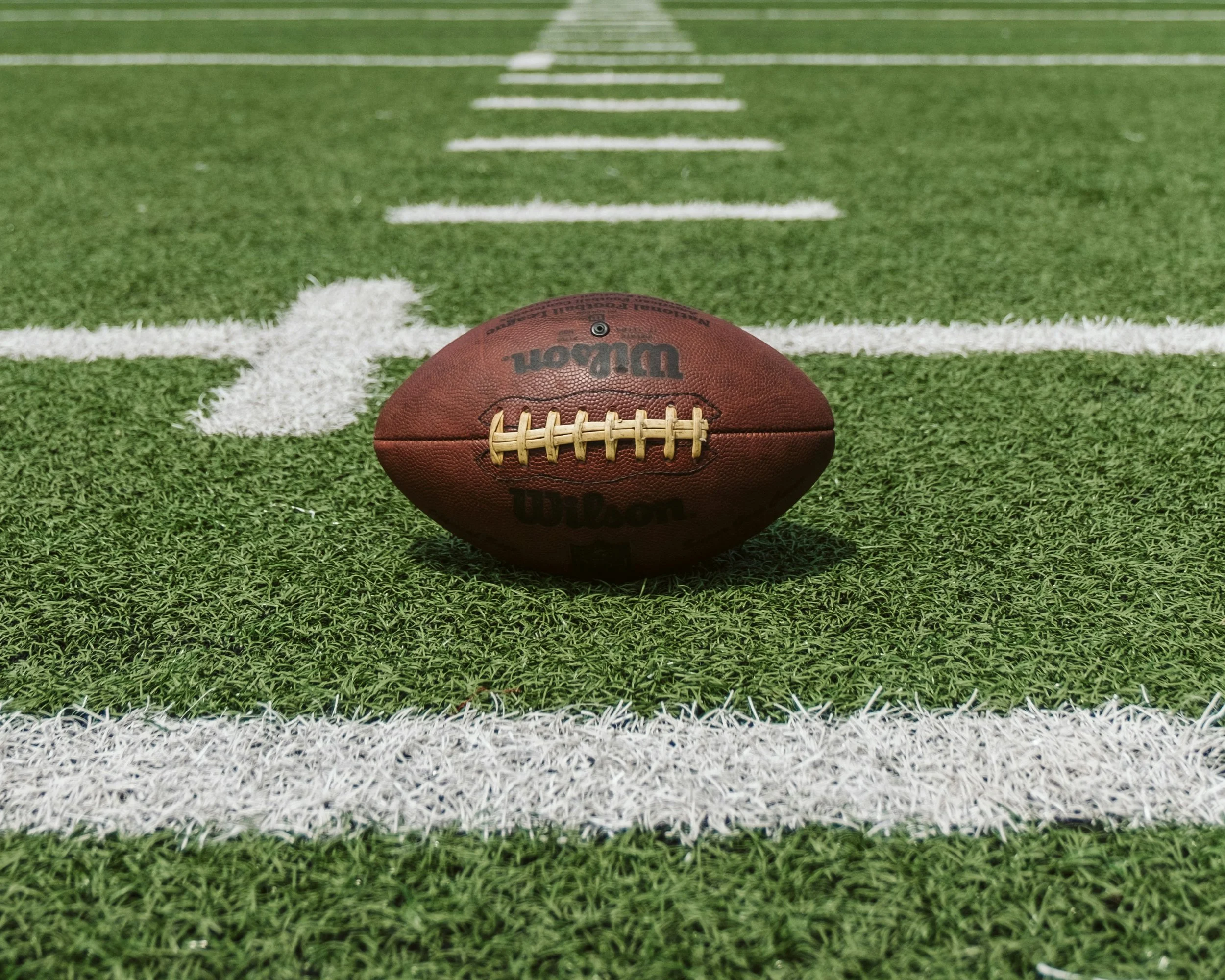
I love football. Whether it’s high school, college, or the NFL, I can’t get enough of it. So, when the spring and summer football doldrums hit — the long stretch in between the Super Bowl and the start of the upcoming football season — I suffer. I’m bored, uninspired, and watch for any football related headline to pop up.
That’s why spring football and it’s various iterations — the XFL, the USFL, and now (in 2026) the UFL — became my saving grace. It doesn’t carry with it the same college traditions and rivalries; it doesn’t carry the star power of NFL games; but it’s football.
I wanted to know more about spring football. Yes, Jeff Pearlman had written “Football for a Buck”, detailing the rise and fall of the USFL in the 1980s, but I wanted to take a modern day approach and write a narrative on spring football, what we can learn from its past, and how it’s current iterations could succeed.
I created a full book proposal, but the idea - perhaps in a similar vein to spring football - never got an traction.
So here, on my blog, is the sample chapter of The Spring Football Book That Never Was.
Introduction
The crowd at the barely-filled Choctaw Stadium erupted at the sight of Dwayne “the Rock” Johnson.
The baseball stadium in Arlington, Texas had been converted to a 100-yard field for the the 2023 XFL kickoff as the Arlington Renegades, donned in baby blue with black stripes jerseys, were slated to take on the Vegas Vipers, wearing contrasting white jerseys with black stripes, a game with the backdrop of an overcast February day.
As Johnson approached the middle of the field, the cheers grew silent.
“They told you the dream was over, but here’s the truth,” Johnson said, who was a co-owner of the revitalized spring football league. “Your dream is just beginning. You’re going to come out on this field, line up, and show the world what it’s like to be truly hungry with that chip on your shoulder. I know, because I got that same chip. We’re here because the X of the XFL represents the intersection of dreams and opportunity. You brought the dreams, we brought the opportunity. To all the players, coaches, and most of all, to all the fans: I declare these words as we kick off the XFL Season: let’s ball out, baby!”
The crowd erupted, making Choctaw Stadium — which can hold nearly 50,000 people — feel much more crowded than it actually was with only 12,000 in attendance. Then, fireworks shot off behind him — followed by an erupting flame, blasting heat into the 48 degree weather.
It was the start of the 2023 XFL season, which would feature 40 regular-season games, and 3 postseason games split up across 8 teams during a 10-week spring season. The XFL featured two divisions: in the South, the Arlington Renegades, the Houston Roughnecks, the Orlando Guardians, and the San Antonio Brahmas. In the North Division, the DC Defenders, Seattle Sea Dragons, St. Louis Battlehawks, and Vegas Vipers.
While Johnson was talking to football players seeking a first or second chance — a spectrum of talent, ranging from ages 18 to 32 who had never played professional football or had been exiled from the NFL and were looking for a way back in — he was also talking to himself.
More than two decades years earlier, in 2001, a much younger version of Johnson — sporting a full head of hair and wearing a black turtle neck — stood at midfield at the Los Angeles Coliseum, revving up the crowd before a Chicago Enforcers vs Los Angeles XTreme Game in what was a previous iteration of the XFL owned by Vince McMahon.
After calling out the NFL for leaving the massive market of Los Angeles, leaving a void that the XFL briefly filled — “we’re sick and tired of NFL suits telling us what we want,” he said — he paused for a dramatic effect, and rang out “Do you smell what the XFL is cooking?!”
Johnson wasn’t playing in McMahon’s XFL, though he may have wanted to. After attending and playing for the University of Miami from 1991-1994, he wasn’t drafted in the NFL. To keep playing football, his only option was the Canadian Football League. But plagued by injuries, his football career ended quickly, and that's when he joined the WWE.
McMahon — the owner of the WWE — tapped Johnson’s growing fame to not only excite the crowd for the game, but to draw as much attention as possible to the new spring football league.
Since his speech at the Los Angeles Coliseum in 2001, Johnson has had nothing but success: he’s appeared in more than 30 movies, including the Fast and Furious franchise, Baywatch, Jumanji and others. In the wrestling ring, his resume is glowing as a 10-time world champion. His estimated net worth? A cool $270 million.
But even with so much success, the dream of success on the gridiron has always eluded him. Johnson frequently tells the story of how he calls himself number 54 — with a 53 man roster in the NFL, he was always one spot shy of making the roster. And it’s a number he’s never forgotten. During his speech at Choctaw Stadium to kick off the 2023 XFL season, he was wearing a baby blue Arlington Renegades jersey.
The number?
You guessed it: 54.
So when Dany Garcia, a film producer, incredibly successful business woman and a former wife to Johnson, pitched him the idea to buy the XFL in 2020, which was trapped in bankruptcy from its previous owner, McMahon, Johnson was all in.
In August 2020, Johnson, Garcia, Gerry Cardinale — the founder of RedBird Capital, a private equity firm — signed on the dotted line for the rights to the XFL only hours before it was set to go to auction. The cost was $15 million.
As Johnson, Garcia and Cardinale put their heads together on the latest (and potentially greatest) iteration of the XFL, a question lingered in the background.
It wasn’t whether not they would find players and coaches who wanted to take the field, or even if they could put a good product for fans; how were Johnson — along with Garcia, and Cardinale — going to succeed in a business venture that had failed and bankrupted nearly all of its predecessors?
***
There’s a saying that’s been written on posters and spread across football training facilities; it’s been said during pre-game speeches to hype players up and during halftime to re-energize a team to come out strong for the second half.
“Tough times don’t last — tough people do.”
The man who coined that quote, Robert H. Schuller, was a televangelist and motivational speaker.
Truth is, he never played football. And he certainly never tried the business venture of spring football. For those in the business of spring football, tough times is all you had — an infinite loop of losing money, losing fans, losing your reputation, and losing your mind in the process.
The first known iteration of a spring league comes from the Trans American Football League, which despite its lofty name, took place in the state of Texas in 1971.
In what was dubbed “The Great Experiment”, six teams, including the Texarkana Titans, Dallas Rockets and Fort Worth Braves played for a spring league title.
"This is the first bona fide attempt to play spring football," renowned Sports Illustrated pro football columnist Tex Maule said of the new league. Expectations were high, but fan support — and money — was low. The league folded after only one year.
The next iteration of spring football came in the following decade: the United States Football League. Similar to the Trans-American Football League, expectations were high, especially considering the league poached football talent including Doug Flutie, Jim Kelly, Herschel Walker, Steve Young and more. The product on the field had potential, but would fans and their cash follow? From 1983 to 1985, it didn’t pan out.
Stories of players riding school buses with no air conditioning to and from practice and players fighting over who could be the first in line at the bank to cash their game check before they began to bounce abounded.
In 1984, the league, led by New Jersey Generals owner Donald Trump, wanted to move to fall with a simple motive: compete with the NFL head on and force a merger. An antitrust lawsuit with the NFL followed, and the court awarded the USFL nominal damages of $1.
With little money, little fan interest, and little leadership, the court ruling was the nail in the coffin of the USFL. But no one at the time realized the USFL would have a Lazerus-type effect in the decades to come.
Fifteen years later, Vince McMahon entered the spring football league ring with the XFL. Unlike the USFL — and unlike the Trans American Football League before it — he entered the business with a bonafide partner: NBC.
The combination of NBC’s coverage and the WWE’s entertainment prowess initially resulted in a jam packed Sam Boyd Stadium in Whitney, Nevada for the kickoff between the New York Hitman and Las Vegas Outlaws in 2001.
Before the game started, McMahon strutted to midfield with a microphone in his hand. “We welcome you to our brand of football,” he told the screaming crowd. “We welcome you to our game. We invite you to enjoy the all access pass that gets you the freedom to go places other leagues determined to be off limits. So to our worldwide television audience, to fans all over, on behalf of the players we say thank you for the privilege of competing for you tonight. Ladies and gentlemen, this is the XFL!” The crowd erupted, and fireworks ensued, filling the stadium with smoke.
His speech — and the game itself — was seen by an estimated 14 million viewers and pulled a shocking 9.5 Nielsen rating — double those of what NBC had promised advertisers.
But fans couldn’t be fooled.
The quality of football — hard hitting defenses, air-it-out offenses — wasn’t there.
Each week, viewership declined until it hit embarrassingly low numbers. The NBC telecast of the New York Hitman and Chicago Enforcers earned what was the lowest rating ever for any major network primetime weekend to date, and after the season, NBC pulled the plug. While McMahon tried to keep the XFL alive, it folded and was tossed in the bin of failed spring leagues.
In 2009, a new league entered the mix: the United Football League. After investors pooled together nearly $20 million dollars — $10 million of which came from Paul Pelosi, the husband of politician Nancy Pelosi — the league played through 2012. A combination of playing in the October and November months and low fanfare caused the UFL to close its doors.
Nearly 10 years later, McMahon was back in the spring football league ring, and this time, he had $200 million in his back pocket. Older and wiser, he had learned from his previous mistakes. It was going to work this time, really.
The latest iteration of the XFL kicked off in 2020, and the timing couldn't have been worse. Five weeks into the season, the world halted due to the Covid-19 pandemic, and so did the XFL. It filed for bankruptcy in April of that year.
A few months later, in August 2020, Johnson, Garcia and Cardinale collectively bought the XFL, and re-launched it in 2023. But, in 2024, after losing an estimated $60 million dollars during the 2023 season, the XFL merged with the USFL, which itself had been revived by Fox Sports starting in April of 2022.
I get it, it’s confusing. So, let’s get this straight. The United Football League, a previously defunct football league, is now comprised of the XFL, a previously defunct spring league, and the USFL, a previously defunct spring league.
Makes sense, right?
As a lifelong football fan looking for entertainment outside of the NFL season, I watched all of this unfold in real time and had questions. Like my previous books, that was the organic start of this project.
Why had spring leagues failed so spectacularly? There’s history and details, yes, but I wanted to find out not only how each spring had failed, but why each one had failed.
Was there a common thread, dating back to 1971?
Additionally, I wondered how a spring league can actually succeed. What qualities and parameters does it need to survive?
Along with that, why has the NFL wildly succeeded since 1920 — can you think of another sport that owns a day of the week? — but a spring league can’t sustain more than a few years at best?
In this book, I set out to answer these questions — and questions that came up along the way — to definitively say whether or not spring football is an attainable business venture.
In the process, I learned so much that I didn’t know. Like the ahead-of-his-time vision of George Schepp, the Commissioner of the Trans American Football League — and the football leagues that predated it, including the Continental Football League & Texas Football League.
I spoke with previous XFL and USFL players who told me what was going on upstairs was far more entertaining — the attempt to run the leagues — than the football on the field.
I toured the UFL practice fields, chatted with its workers, and identified how they’re taking a different — and sustainable — approach to spring football.
I spoke with spring football league players, past and present, about how the opportunity has changed the trajectory of their careers and their lives.
This, and much more — all of which I’m excited to share with you in the following pages.
Above all, for this book, I sought to understand why Johnson, along with Garcia and Cardinale — and all the previous spring league football owners — were willing to take risks that, like the game of football, can make or break you.
What I found is that the football mentality — lining up in front of millions of people and putting everything on the line — not only exists amongst those with pads on. In the case of the 2025 United Football League, those wearing suits are lining up and putting everything on the line — and hoping, despite a historical string of embarrassing defeats, they can pull off a win for the ages.
